The Mixer That Still Works at 4pm: Choosing Mortar Kit for a Stone Shop

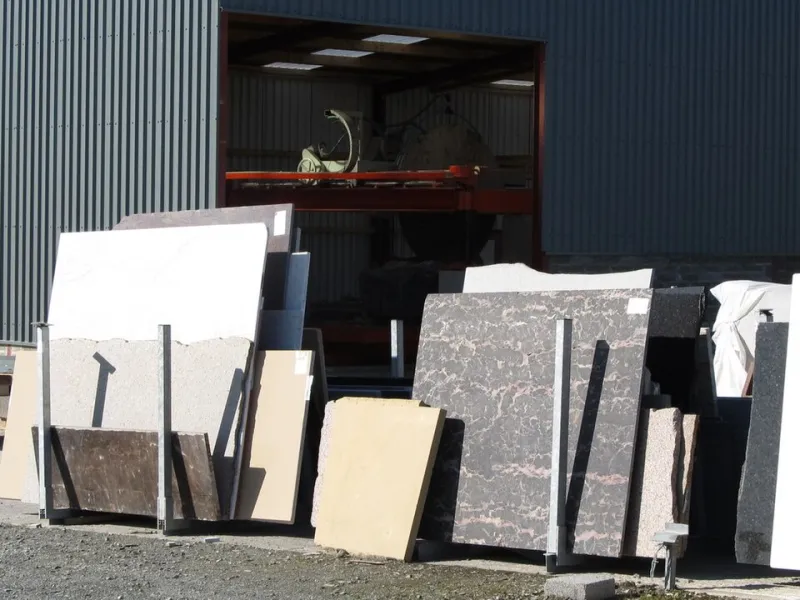
Photo: mortar pan mixer in stone masonry workshop, via www.thecelebritydresses.com
Every stone shop has a mixer story. Usually it involves a machine that was cheap, had a 'recent service' and died halfway through a Friday afternoon batch while three people stood around waiting for muck. The story ends with a hire shop, a card payment and a lesson about buying on price alone.
Mortar is not concrete. A mixer that turns a decent batch of concrete can still make a poor job of lime mortar, render or a stiff pointing mix. If you are buying for a working UK stone shop, the question is not 'what is the biggest mixer I can afford?' It is 'what mixer will give me consistent batches, day after day, without needing a rebuild by Wednesday?'
Start with the work, not the brochure
Before you look at litre ratings and motor badges, write down what you actually mixed last month. How many batches? What were they? Lime mortar for pointing, sand and cement for bedding, render, screed, or the occasional bit of concrete? Were they small 25kg-bag batches or full barrow loads? Did you mix once a day or six times before lunch?
That list will tell you more than any sales page. A shop doing small pointing repairs and the odd lintel bed does not need a 200-litre pan mixer. It needs something that starts reliably, mixes a consistent batch and can be cleaned without a chisel. A shop pushing out large runs of sawn stone and bedding every day will want more capacity, but only if the power, space and cleaning routine are there to support it.
A big mixer is a wonderful thing until you have to clean it, move it, or explain to the electrician why it keeps tripping the workshop supply.
Drum, pan or forced action?
Small tip-up drum mixers, often called belle mixers whatever the badge on the side, are the default in a lot of UK workshops. They are cheap, portable and fine for concrete and sloppy mixes. For mortar, they are a compromise. The mix relies on gravity and the drum turning, so you can get dry pockets, uneven colour and a batch that needs far more fiddling than it should. If you are mixing lime mortar or a stiff pointing mix, a drum mixer will make you work harder for a worse result.
Pan mixers are the sensible step up for stone work. A stationary pan with rotating paddles gives a more consistent mix, handles stiffer mortars and copes better with lime, sand and small aggregates. They are heavier and more expensive, and cleaning takes discipline, but the batch quality is usually in a different league.
Forced-action mixers are often talked about in the same breath as pan mixers. The principle is simple: paddles force the material around the pan rather than relying on a drum to tumble it. That makes them good for mortar, render and mixes that need to be consistent rather than just wet. The trade-off is that they reward good habits. Leave mortar in the pan overnight and you will spend the next morning with a hammer.
Size it to the batch, not the dream
Mixer capacity is usually quoted in litres, but that does not mean you get that much usable mortar every time. A 120-litre pan mixer will not give you 120 litres of perfect muck, and a 200-litre machine will not make you busier. Size for the batches you actually mix, with a little headroom for the bigger jobs.
For a small stone shop doing pointing, bedding and repair work, a 90 to 140-litre pan mixer is often the sweet spot. It is big enough to keep two people working without constant refilling, but small enough to clean and move. If you routinely mix for larger crews or bigger bedding jobs, a 160 to 200-litre machine may earn its space, but only if you have the power and access to match.
Power matters as much as capacity. Check whether the machine is 230V or 110V, and buy for the supply you actually have. A 110V site transformer is not a nuisance to work around if it is set up properly, but it is a nuisance if you are constantly swapping leads. Also look at duty cycle. A mixer rated for short runs with long cooling gaps is not a production machine, no matter how shiny the paint is.
The used market: bargains and boat anchors
A used pan mixer can be a very good buy. A used pan mixer with a worn paddle shaft, a noisy gearbox and a cracked pan is a project, not a bargain. The difference is usually obvious if you take twenty minutes to check it properly.
Run the machine empty and listen. Then ask to see it mix a stiff batch, not a bucket of slop. Check the gearbox oil for colour and leaks. Grab the paddle shaft and feel for play. Look at the paddles and scraper arms for wear and check that they clear the pan properly. Inspect the pan for cracks, bad repairs and thin spots. Check the belts, pulleys, motor brushes if it has them, and the switch gear. Make sure the guard and emergency stop work. Ask about spares availability, because a cheap mixer with no paddles or shafts available is scrap with a plug on it.
Also think about weight and access. A heavy pan mixer that cannot get through the workshop door or around the corner is not going to earn its keep. If it needs two people and a pallet truck to move it every time you sweep the floor, you will stop moving it and start working around it.
The cheapest mixer costs the most
A cheap mixer saves money on the day you buy it and then charges you back in downtime, inconsistent batches and callbacks. Mortar that is mixed unevenly can vary in colour, strength and workability. On pointing and repair work, that shows. It shows in the finish, in the way the muck behaves under the trowel and in the phone call three weeks later.
A mixer that quits on a Friday costs more than the difference between a decent used machine and a cheap one. You pay for the hire machine, the lost afternoon and the knock-on effect on the next job. If you only need a mixer for one big job, hire it. If you need one every week, buy one that will still be working at four o'clock on a Friday afternoon.
The sensible buying routine
Work out your real batch sizes. Decide whether you need drum, pan or forced action. Check the power supply. Measure the doorway. Then look at new and used machines with the same checklist. Budget for a spare paddle or two, a decent hose and a cleaning routine that actually happens. Keep the mixer clean, keep the guard on and do not let mortar set in the pan overnight.
A mixer is not the most exciting thing in a stone shop. It is one of the few pieces of kit that touches almost every job. Buy the one that makes consistent muck and starts when you need it, not the one that looked like a bargain on a Saturday morning.