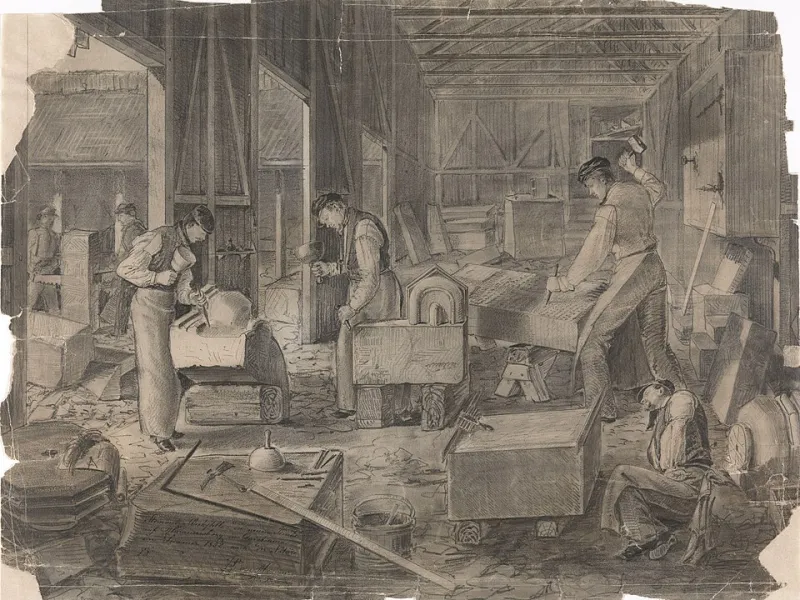
The Wrong Number: Why Your Carving Bench Is Quietly Wrecking Your Back
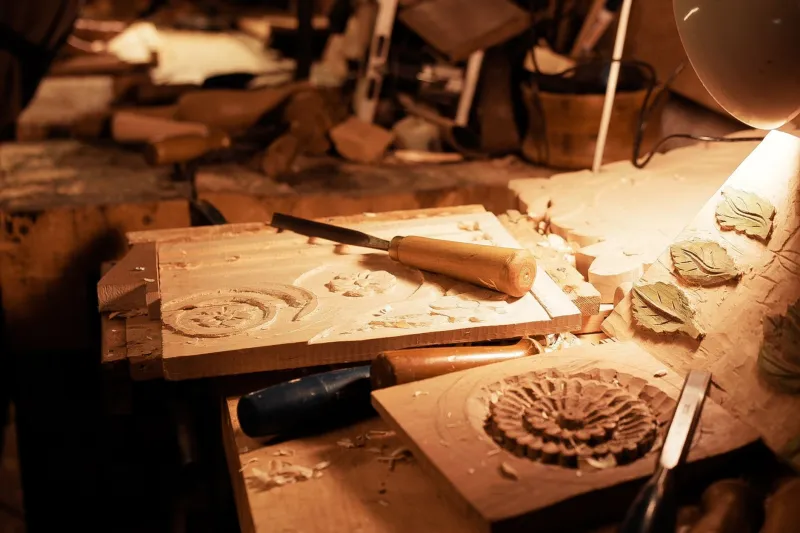
There's a particular ache that settles between the shoulder blades after a morning of letter cutting. Most masons blame the stone. Some blame the chisels. A few blame the fact they're not 25 any more. Fair enough. But before you spend money on a new vice or a fancy stool, get a tape measure out and check the height of your bench. A lot of the time the problem isn't your back at all. It's the number you built the bench to.
I've done it myself: set a trestle up because it was the right height for the saw, then spent three days dressing blocks on it and wondered why my neck felt like a bag of gravel. The bench wasn't badly made. It was just built for a different job, or a different person. In a small UK shop, where the same bench has to do four things, that happens fast.
Measure Your Own Numbers First
Forget the standard workbench height you read online. It was probably written for a joiner, or for someone 5ft 10in in bare feet. You want two numbers, and you want them in your work boots, on your shop floor, not in socks on a carpet.
Stand up straight, arms hanging loose. Measure from the floor to the knuckle of your middle finger. That's your knuckle height. It's the number that matters for dressing stone: the top of the block should sit roughly there when you're working the face. Any lower and you're stooping. Any higher and your shoulders creep up around your ears.
Next, measure from the floor to the point of your elbow. That's your elbow height. For finer work at the vice or banker, jaws or work surface want to be around that mark. Not chest height, not waist height. Elbow height. If you're letter cutting, the face of the stone should sit somewhere between elbow and sternum, tilted towards you. Eye level is for inspecting a letter, not for cutting it. You don't want your nose on the stone for an hour at a time.
Write both numbers on the wall by the bench in pencil. They'll change when you change boots, and they'll change again if you buy a decent mat. That's fine. It's a working number, not a permanent one.
What Goes Where
A quick rule of thumb for a mixed shop:
- Dressing a block: top of stone at knuckle height. Trestles set so the block sits there, not so the trestle top does. Remember the block has thickness.
- Vice work: jaws at elbow height for filing, rubbing down and edge work. For sawing, drop it a bit, because you want your shoulder over the cut, not your chin.
- Letter cutting: work tilted 20 to 30 degrees, face at elbow-to-sternum height. Tilt the work, not your neck.
- Inspection and measuring: this is the only time eye level is right. Set a separate high bench or use a stand if you're checking a lot of work.
That last point catches people out. They set the banker high so they can see the lettering, then cut at nose height for two hours. Seeing the work and cutting the work are two different postures. Build for the cutting, then lift or tilt the piece when you need to look.
The 20-Minute Rule
Even a well-set bench will stiffen you up if you stand at it all morning. The fix is boring and effective: rotate every 20 minutes. Rough dressing, then fine work, then measuring, then sharpening, then back to rough dressing. Each task puts your body in a slightly different position, which is half the battle.
Set a timer on your phone. A wind-up kitchen timer is better, because you can't scroll on it. When it goes, finish the pass you're on, not the whole block. The whole block is how a 20-minute stint turns into an hour of leaning on your left hip.
This isn't a physio plan. If you've got real pain, see someone who knows what they're doing. But for the everyday grind of a stone shop, rotating tasks and changing height does more than any gadget I've bought.
Cheap Adjustments That Actually Work
You don't need a new bench. You need to raise or lower the one you've got.
Packing blocks under trestles. Offcuts of timber, scaffold board, rubber pads, even a folded piece of conveyor belt. Cut them to a known thickness and mark the height on the trestle leg with a paint pen. Then you can go from block height to banker height in a couple of minutes without hunting for the right packer.
Anti-fatigue matting. Bare concrete is the enemy. A 12 to 18mm closed-cell rubber mat makes a real difference, especially if you're standing in one spot. Don't bother with carpet offcuts; they trip, they hold slurry, and they go flat in a week. Buy a proper mat and sweep it.
Better vice jaws. Worn, shiny jaws make you grip harder, and gripping harder pulls your shoulders up. Fit aluminium or copper soft jaws, or timber facings, so the stone sits without you wrestling it. Sharp jaws also mark the work, which means more finishing, which means more time hunched over the same block.
Task lighting that comes from the side. An overhead strip light behind you throws your own shadow on the scribe line. Put an LED work light to the side, at roughly eye level, angled across the face. You'll stop leaning in to see, and your neck will notice by lunchtime.
Five Minutes With a Tape
Before you blame the tools, spend five minutes with a tape measure. Knuckle height, elbow height, top of block, vice jaws. Write the numbers down. Pack the trestles. Move the light. Then set a timer and see how the afternoon feels.
A bench is just a number until you make it yours. Get the number right and the stone stops fighting you.