Before the DNO Quote: What a Workshop Power Upgrade Actually Asks of a Stone Shop
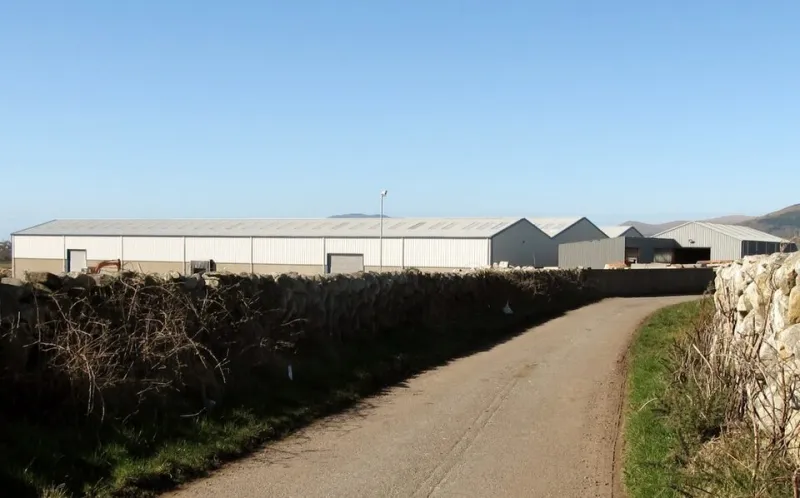
Photo: Eric Jones , CC BY-SA 2.0, via Wikimedia Commons
The auction lot that starts it all
You spot a used bridge saw at auction. Three-phase, proper size, sensible money. A mate says his electrician can “sort the supply” and suddenly the workshop feels small, the single-phase extractor feels tired, and the future looks like a bigger building with a bigger door and a bigger supply.
That is the moment to slow down. A three-phase upgrade is not a plug-and-play job. The electrician’s quote is one line in a longer sum, and the line that hurts most often comes from the distribution network operator, not the sparky.
This is not an argument against three-phase. If you are running serious machinery all day, it can be the right answer. It is an argument for pricing the whole thing before you buy a machine that only works on the other side of a supply you do not yet have.
What the DNO is actually charging for
In the UK, your distribution network operator — the DNO — owns the cables and equipment that bring power to your unit. If you want a bigger supply or a new three-phase connection, they have to check whether the network can take it. Sometimes it can. Sometimes it needs reinforcement: a new service, a bigger fuse, a transformer change, or work further up the line.
That work is quoted in its own language. You may see contestable and non-contestable works, an MPAN, capacity charges, wayleaves, and a connection offer with a validity date. The headline number can be modest or frightening, depending on where your unit sits on the network. A unit on an industrial estate with spare capacity is a different proposition from a rural yard at the end of a long overhead line.
Then there is time. A DNO quote is not a delivery date. Reinforcement can take months, and the programme can move. If your lease is short or your workload is seasonal, that matters as much as the pounds.
The board, the cable and the bits nobody puts in the headline
Even if the DNO side is straightforward, the internal works are not just “a new board”. A proper three-phase installation may need a new distribution board, three-phase circuits, isolators, cable containment, earthing and bonding checks, surge protection, RCBOs, phase balance, fire sealing where cables pass through walls, and testing and certification at the end.
Cable routes are a real cost. Older units often have no spare containment, no easy route from the meter position to the workshop, and no space for a bigger board. If the supply has to be moved, or the earthing arrangement is questionable, the quote grows.
And do not forget the machines themselves. A three-phase motor may need a suitable starter, correct rotation, overload protection, and sometimes a soft starter or inverter. A second-hand machine can arrive with a control panel that is older than the apprentice and not quite compatible with the new supply arrangement. That is not a reason to walk away, but it is a reason to get the machine checked before it lands.
Standing charges do not take a day off
A bigger supply can bring a bigger standing charge. Business electricity tariffs often include a capacity or availability element, and a three-phase connection may also mean different metering arrangements. The exact structure depends on your supplier and profile, but the principle is simple: you can pay for capacity whether you use it or not.
That matters in a stone shop because masonry work is not always a steady load. You might run a bridge saw hard for two days and then spend a week on repair and installation work. If the standing charge is based on a maximum demand or agreed capacity, the quiet week still costs money.
Run the numbers over three to five years, not just month one. Add the DNO connection, the electrician’s works, the machine cost, any landlord contribution, and the standing charge. Then compare that with the work the new machine is actually going to win. If the answer depends on a contract you have not signed yet, the answer is not yet.
The disruption is part of the price
A supply upgrade can mean a shutdown. Sometimes it is a planned day; sometimes it is longer. If you are a small shop, a day off the tools is a day without output, and if you have staff, it is a day you still pay for.
There is also the physical disruption. Boards, cables, isolators, and meters need wall space. Access needs to be kept clear. If you rent, the landlord may need to approve works, and the lease may say who owns the installation at the end. If the unit is shared, you need to know how the supply is split and who pays for what.
None of this is glamorous, but it belongs in the decision. A workshop power upgrade is a building project with an electrical ending, not a shopping trip.
Single-phase is not a toy
Modern single-phase machinery is better than many masons assume. A well-chosen 2.2kW or 3kW motor will run a decent table saw, a grinder, a dust extractor, or a small compressor. It will not replace a big bridge saw, but it can do a lot of real work.
There is also the converter route: rotary converters and inverters can run three-phase motors from a single-phase supply. They can be useful for one machine, but they are not a free upgrade. You need to size them properly, check the motor’s starting load, and accept that some machines with sensitive electronics or multiple motors may not behave. A converter is a workaround, not a substitute for a proper supply.
Hire and subcontract are legitimate answers
If the three-phase work is occasional, hire is often the sensible choice. A floor saw, a bridge saw, a compressor, or a specialist cutter can be hired for the days you need it. You pay for the capability when the job pays for it, and you do not carry the standing charge through the quiet months.
Subcontract cutting is the other option. Send the heavy slab work to a fabricator with the right saw and water treatment, and keep the fitting, repair, and finishing work in-house. You lose some margin, but you also lose the capital outlay, the downtime, and the maintenance. For a shop that is not yet sure of its throughput, that can be the more professional choice.
A practical checklist before you call the DNO
- List the machines that genuinely need three-phase, with motor sizes and starting loads. Do not size the supply around a wish list.
- Ask an electrician for a maximum demand calculation based on realistic simultaneous use.
- Get a capacity check from the DNO before you buy the machine. A cheap saw is not cheap if the supply quote is not viable.
- Get the internal works quoted in detail: board, cable route, isolators, earthing, testing, certification, and making good.
- Ask the landlord what is permitted and who owns the installation.
- Add the standing charge and any capacity charge over at least three years.
- Estimate the downtime and the lost output.
- Price hire and subcontract cutting against the same jobs.
- Decide only when the work pipeline, not the auction listing, justifies the upgrade.
Three-phase can be the right move for a growing stone shop. But the trap is treating the electrician’s quote as the price of entry. The real price includes the DNO, the board, the downtime, the standing charge, and the work you might turn away while the supply is being sorted. Design the work around the supply you have until the numbers prove you need more.